
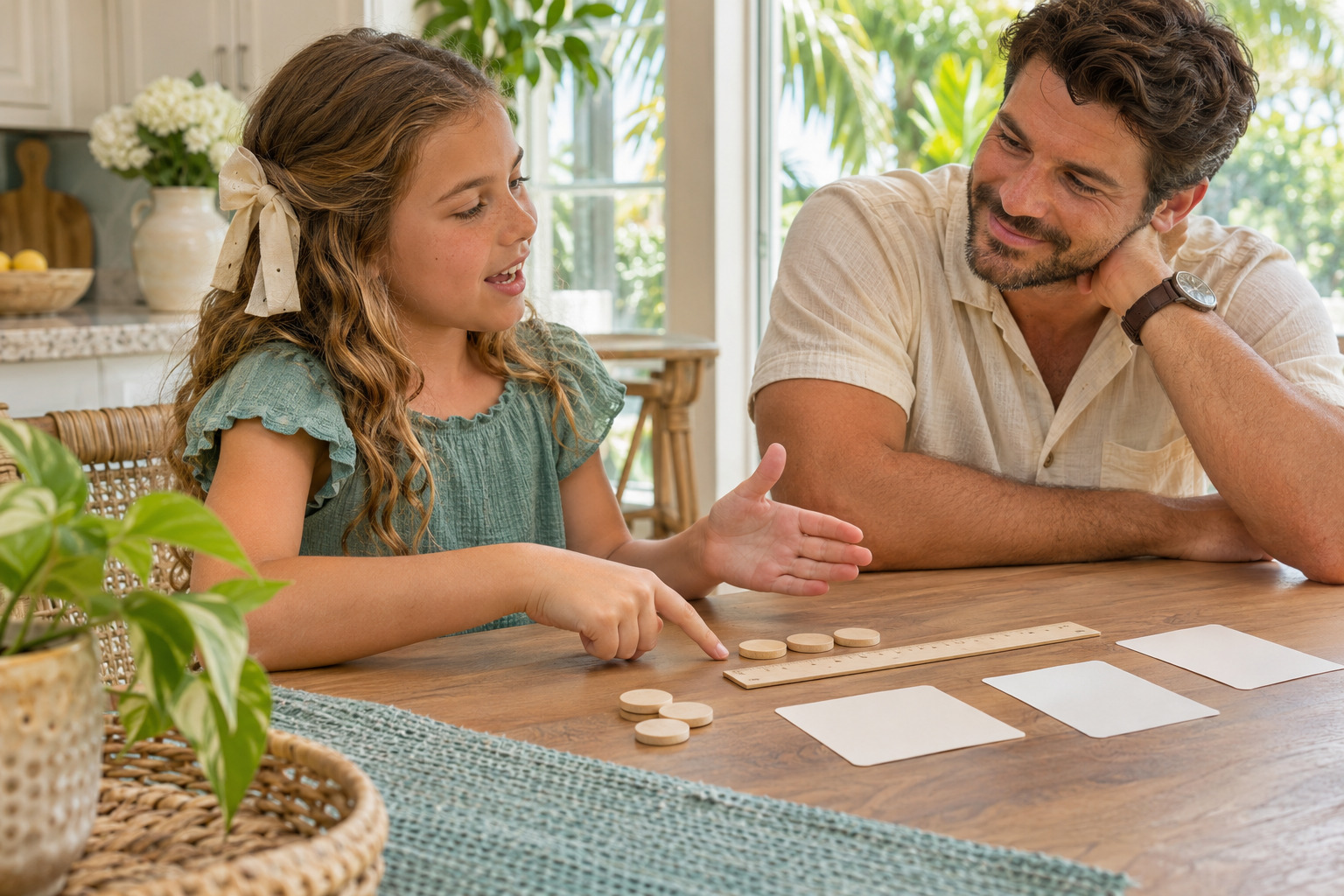
Math · K–8, with flexible activity paths
Everyday Math Challenge Cards
Make everyday moments count. These 24 short math missions invite learners to notice, try a strategy, and explain their thinking.
Printable digital PDF · 6 pages
$12View details
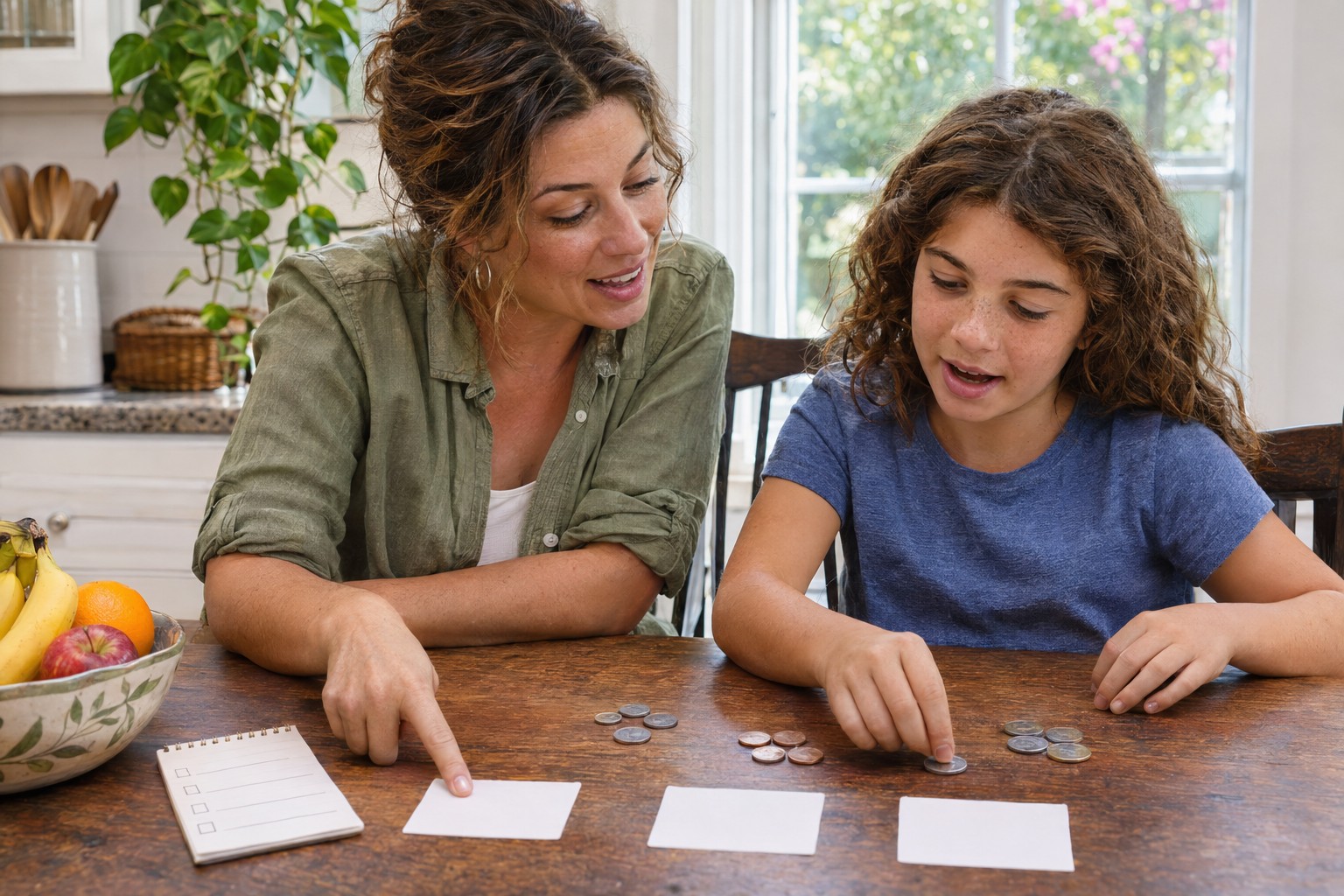
Turn everyday choices into approachable math conversations.
Twelve low-pressure missions help learners compare prices, explore simple budgets, and make sense of data using pretend numbers.
Real-life math can begin with a small question: Which plan stays within the pretend budget? How can we compare two package prices fairly? What does a table show, and what is still missing? These 12 pages give families familiar, fictional scenarios for practicing addition, division, simple budgeting, unit price, tables, and graphs.
Younger learners can count, sort, and compare. Grades 3–5 learners can add costs and represent data. Grades 6–8 learners can reason about unit prices and explain limitations in a data set. All dollar amounts are pretend. The activities avoid assumptions about a family's real budget or spending habits and are not financial advice. Source notes point parents to Florida B.E.S.T. math resources as background; this is not an FDOE product, standards certification, or guarantee of outcomes.
No. Every price and budget in the printable is fictional and used only for math practice.
No. It is a family learning activity pack for math conversations and pretend scenarios.
Yes. Younger learners can count, sort, compare more and less, or work with adult help. The suggested core band is Grades 3–8.
No. It references Florida B.E.S.T. math resources as planning background but is not an official FDOE product or certified standards alignment.
Digital download after purchase. No physical item ships.
Pair it with Everyday Math Challenge Cards for quick real-life math practice in your day.
Math · K–8, with flexible activity paths
Make everyday moments count. These 24 short math missions invite learners to notice, try a strategy, and explain their thinking.
Printable digital PDF · 6 pages